2/9/2026 • Car Care • 6 min read
Is Ohio Road Salt Destroying Your Car? What You Need to Do Before Spring
Your car survived Ohio winter - but did your paint? Here's what road salt actually does and what one 25-year detailing veteran recommends before it's too late.
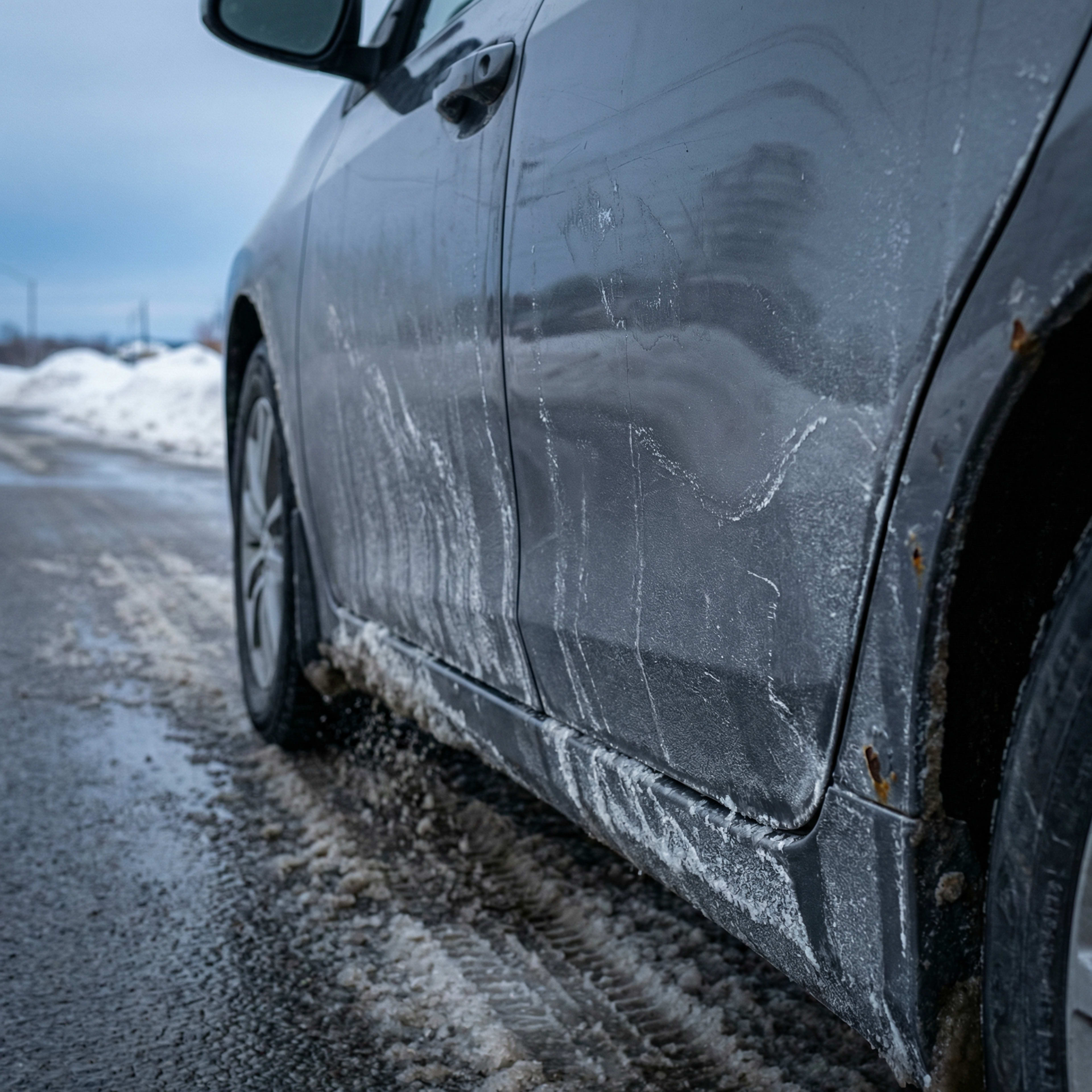
If you drive in Stow, Akron, Cuyahoga Falls, Hudson, Kent, Tallmadge, or anywhere in Northeast Ohio, this is the time of year I have the same conversation over and over:
"My car made it through winter. I think I'm good."
I get why people feel that way. The snow is melting, the roads finally look better, and your vehicle might even look clean after one wash. But the damage from Ohio winter does not end when the salt trucks stop rolling.
The real issue is what got left behind on and inside the paint surface.
After 25+ years of hands-on detailing, this is exactly when I see preventable paint damage start to snowball. If you handle it now, your paint stays cleaner, glossier, and easier to maintain through the rest of the year. If you wait, spring and summer heat can lock in what winter started.

What road salt actually does to your finish
Ohio roads are treated aggressively for safety. That mix of sodium chloride, calcium chloride, moisture, and traffic grime is rough on paint. Most drivers focus on what they can see, like chips or dullness. What worries me more is what you cannot see right away:
- Chemical residue left on the surface and in seams.
- Embedded contamination that makes paint feel rough even after washing.
- Fine marring from winter wash methods and dirty contact points.
- Early breakdown of whatever protection layer you had before winter.
Even if you rinsed often this winter, contamination still builds around rocker panels, wheel arches, lower doors, and trim edges. That contamination keeps working against your finish until it is fully removed.
The spring mistake I see most often
The biggest mistake is going straight to a quick wax or spray product on top of a contaminated surface.
You might get temporary shine for a week or two, but you are sealing over problems. That reduces bonding quality for longer-term protection and can make the paint look tired again much faster.
My process is always the same because it works:
- Decontaminate correctly.
- Correct defects where needed.
- Protect the clean surface.
That sequence matters whether you choose ceramic coating, paint protection film (PPF), or both.
If you want me to evaluate your specific vehicle and mileage pattern, book your spring protection appointment and I'll give you a straightforward plan.
Why spring is the best time to protect
Spring gives you the best timing window all year in Northeast Ohio:
- Winter contaminants are still fresh enough to remove efficiently.
- You can prep once before heavy UV, rain, and summer mileage stack up.
- Protection performance is better when applied to properly prepared paint.
- Maintenance gets easier right when road film and pollen pick up.
In plain terms: doing it now saves effort later.
I would rather set you up with a clean, stable baseline in March or April than chase avoidable damage in July.
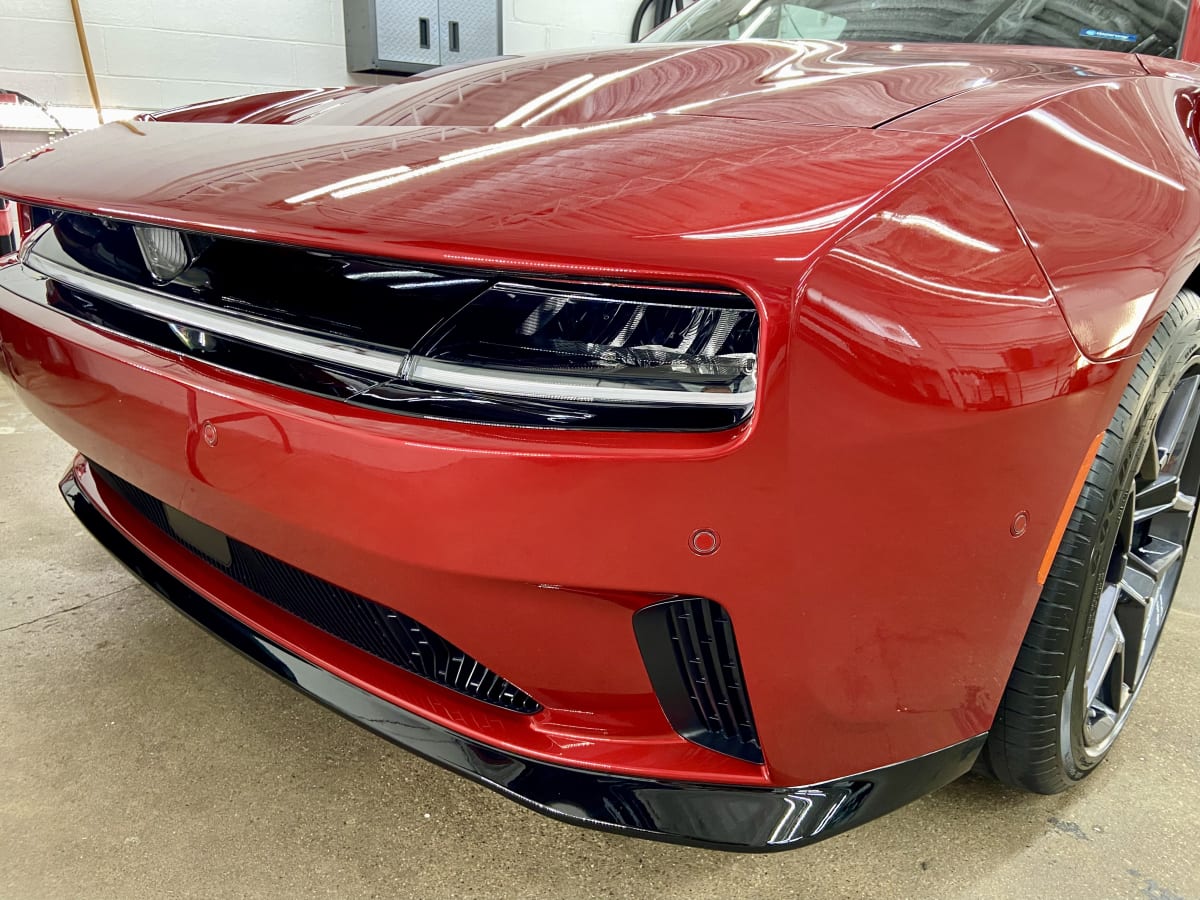
Ceramic coating vs PPF: what should you choose?
This is the question everyone asks, and there is no universal answer. It depends on your vehicle, where you drive, and what you care about most.
Choose ceramic coating when your priority is:
- Easier washing and less grime adhesion
- Better chemical resistance
- Stronger gloss and depth
- Better day-to-day maintenance behavior
Ceramic does not stop rock chips, but it does make ownership easier and keeps finishes looking sharper with less effort.
Choose paint protection film (PPF) when your priority is:
- Physical impact protection
- Front-end chip defense
- Protecting high-impact commuting zones
- Preserving newer factory paint long term
PPF is your physical armor. If your commute includes highways, construction routes, or winter-heavy miles, this is where you get the most value.
Choose a combined strategy when you want both
For many Summit County and Northeast Ohio drivers, the most balanced option is:
- PPF on high-impact zones
- Paint correction where needed
- Ceramic coating over exposed painted surfaces
That gives you both impact defense and easier long-term maintenance.
What I recommend in real life (not hype)
I'm not interested in selling people a menu they don't need. I'm interested in giving you a system that fits how you actually use your car.
Here's the framework I use every day:
- Inspect the true paint condition in proper lighting.
- Decide the minimum correction needed for your goals.
- Match protection to your driving reality, not internet trends.
Some vehicles need full paint correction before any protection. Others need a lighter enhancement and strategic film placement. Some are better candidates for full specialty detailing and restoration work first, then protection.
No two cars get exactly the same path in my shop, and that is the point.

Quick spring checklist for Ohio drivers
Use this before deciding your next step:
- Does your paint still feel rough after a wash?
- Do you see swirls in direct sunlight?
- Are front bumper/hood/mirror areas collecting chips?
- Is maintenance taking longer every week?
- Are you planning to keep this vehicle for multiple years?
If you answered yes to two or more, now is the right time to act.
If you want help deciding between ceramic coating, PPF, paint correction, or a combined plan, reach out here. I'll tell you what I'd do if it was my own car.
Northeast Ohio reality: your paint is either recovering or declining right now
By late winter and early spring, most vehicles are at a fork in the road:
- You reset and protect now, then maintain efficiently through warm months.
- You delay, contamination stays active, and correction requirements usually increase.
That is not fear marketing. It is what I see year after year across Summit County and Northeast Ohio.
If you want a practical spring plan from someone who has done this for decades, book a quote. I'll walk the vehicle with you, explain exactly what it needs, and skip what it doesn't.
Final word
Your car may have survived winter, but that does not mean the paint came out clean.
Spring is your best opportunity to undo winter stress and lock in long-term protection before summer wear starts. Handle it now, and everything afterward gets easier.
When you are ready, schedule your spring protection appointment. I'll take it from there.
Need Professional Help?
Talk directly with Jay about ceramic coating, PPF, paint correction, or specialty detailing for your vehicle.